IMPORTANTS ABOUT HRM. (Chapter-03)
HRM Trends and Challenges.

In 2025, HR trends focus on employee experience, DEI, flexible work, and digital transformation, while challenges include talent retention, managing change, and implementing AI, all requiring HR to adapt and innovate.
1. Workplace Diversity and Inclusion:
Diverse and inclusive work environments are one of the top trends in human resource management since there is a changing workplace culture in today's companies. Most companies prefer a heterogeneous workforce. It helps the business prosper with better creativity, innovation, and decision-making.
Today, human resource management recruits employees of different genders, ages, languages, social classes, ethnicities, religions, lifestyles, and backgrounds. It empowers employees to bring their life experiences to the workplace and enables businesses to be more competitive in the market.
2. Remote and Hybrid Work Model:
Even after the pandemic subsides, most companies even now offer work-from-home and hybrid jobs for employees. Many young talented employees prefer flexible working hours and choose a work-from-home setting to have a social life outside of work.
It has become one of the most significant trends in HRM. As a result, many business industries have started to revise their working arrangement policy.
3. Upskilling Workforce:
Companies continuously require skills for job roles. Therefore, the HR department has to address this trend in human resource management for efficient business performance. They can start training and developmental programs for employees to develop relevant, sharp skills for professional growth.
Upskilling is also one of the global trends in human resource management since most companies plan budgets on improvement and developmental programs. It helps employees prepare for a change. Upskilling employees can make them understand the job design process and increase employee retention.
4. Augmented Recruitment:
One of the most recent trends in human resource management is the augmented recruitment of the workforce. In the work-from-home trend, most companies and HR constantly look for top talents through augmented recruitment applications. It allows the recruiter to examine the candidate's CV within seconds. It is easy to use, saves time, and avoids selection errors to notice potential candidates.
Furthermore, HR now exercises mobile-friendly hiring to reduce the hassles seen in most physical interviews. It has become a shifting human resource industry trend because of its streamlined process. Maximize your resources with HR outsourcing for small businesses.
Especially the use of video streaming platforms has made recruiting more efficient and faster.
5. People Analytics for Performance:
People analytics is the extensive use of various data and information to make better decisions that affect people at work. It plays an impacting role in human resource management. Over the past decade, it has ranked among the key areas of HR concerns and grown into a global trend in HRM.
Using the right analytics tool can help understand the impact of people on business operations. They collect data and offer information on retention rates and skill gaps to improve the efficiency of the business.
Though many companies are at the early stage of this process, they require effective HR strategies to build solutions to make analytics work. Learn about KYC analyst job descriptions and how to write them effectively.
HRM Challenges
As we approach 2025, the landscape of human resources continues to evolve, presenting both challenges and opportunities for organizations. Whether from AI, remote work, or the ongoing labor shortage, HR professionals are tasked with thinking outside the box when it comes to developing recruitment strategies, updating company policies, and reviewing benefit offerings.
Understanding HR challenges and developing strategic solutions proves crucial for staying ahead in a competitive market. Read on as we explore the top HR challenges expected in 2025 and provide actionable strategies to help businesses thrive.
HR challenges and solutions include the following:
1. Talent Scarcity
Paycor recently surveyed 7,000+ HR, finance, and IT professionals for our annual human resources insights survey. We asked questions about the challenges of human resource management, workplace trends, and more.
91% of businesses surveyed were hiring, and 71% ranked finding quality workers as the No. 1 challenge related to recruitment. A number of factors contribute to the ongoing talent shortage, including:
- Baby Boomer retirement
- Skills gaps
- Low labor participation rates
Trend + Solution: Many employers are tapping into AI to give their recruitment strategies a boost. For example, Paycor Smart Sourcing enables you to spend 75% less on talent sourcing for more qualified candidates in 50% less time. It automatically posts your jobs on thousands of job sites to reach active candidates and taps into the world’s largest database of passive candidates.
The tool leverages AI to identify passive candidates and diverse candidates that may be ideal for a role but are often overlooked by traditional systems. Then, it curates a prioritized list of candidates for every role and contacts the best candidates, so you can focus on interviews.
2. Retention
Quiet quitting, loud quitting, and poor engagement continue to be a challenge for employers and their retention rates. Our survey found 20% of employees will actively search for a new job
in the next 12 months.
Further, Gallup’s recent State of the Global Workplace found only 23% of 120,000+ employees surveyed report being engaged at work. 62% say they’re not engaged, and 15% note they’re actively disengaged.
Trend + Solution: Paycor data finds that employees who have been in their roles for two years or less are the biggest flight risks. Less tenured employees are 38% more likely to search for a job in the next 12 months, according to survey results.
To engage employees, especially the greener ones, companies should invest in extended onboarding and regularly communicate and solicit feedback. This ultimately boosts retention.
3. Organizational Culture
Gartner survey respondents listed this as a top-five priority for 2024, and it will remain important going into 2025. Workplaces are forever changed by the pandemic. Whether you’re back onsite, embracing a hybrid work model, or have gone fully remote, you face unique challenges.
In the Gartner survey, only 26% of organizations report that their employees fully comply with onsite attendance requirements. 41% of HR leaders say employees’ connection to culture is compromised by hybrid work, and 46% don’t know how to drive change to achieve the
desired culture.
Trend + Solution: First, consider your work policies. Paycor data suggests employees who split their time between an office and a remote location are more engaged than their remote and onsite counterparts.
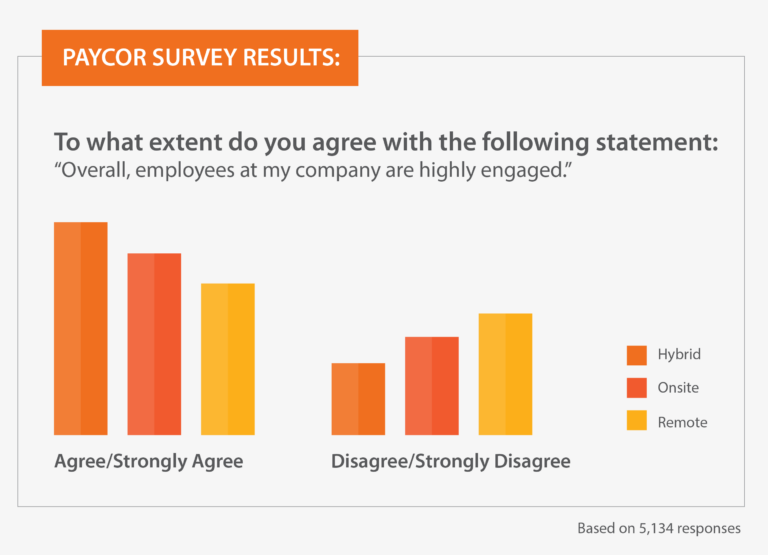
Further, flexibility is often cited as a top reason employees stay at a job. However, flexibility isn’t everything. Our survey found remote workers are less likely to receive productive feedback from managers and less likely to feel they’re paid fairly. It’s evident there’s a lack of trust and connection when it comes to the fully remote workplace.
Remote workers who are actively searching for a new job are 55% more likely to be motivated by the desire to have a better relationship with their manager than onsite workers and 50% more likely than hybrid workers.
The World Economic Forum predicts remote work will increase 25% by 2030. Still, 75% of managers don’t receive specialized training on leading remote teams. Effective leaders and managers help drive engagement, and leaders need more training and support to better serve remote employees. Now’s the time for companies to double down on leadership development.
4. Benefit Offerings
As the workforce evolves, offering a competitive benefits package is essential for both employee retention and attracting new talent. 40% of employers say workers leave their job to find a role that offers better employee benefits, according to Forbes Advisor. Only 54% of workers report being content with the benefits their current employer offers.
HR departments need to assess benefit offerings and ensure they remain competitive and comprehensive.
Trend + Solution: The Society for Human Resource Management (SHRM)’s 2024 annual employee benefits survey gives insight into the benefits employees value most. The percentage of respondents that rate these benefits as very or extremely important is as follows:
- Health care: 88%
- Leave: 81%
- Retirement savings and planning: 81%
- Flexible work: 70%
- Family care: 67%
- Professional and career development: 65%
Other notable findings from the report include:
- Telehealth and mental health care services are becoming more standard in benefits packages.
- Three new benefits were introduced to the survey this year. 17% of employers offer menopause benefits, like counseling or education. 12% or employers cover gender-affirming hormone care. 4% offer lifestyle savings accounts.
- 56% of employers provide at-home work equipment or subsidize the cost.
HR professionals should ensure they communicate current benefit offerings, survey employees on benefits they’d like to see, and strategize on new benefits to add to their roster.
5. Compliance
Compliance is a moving target. From marijuana legalization in several states affecting pre-employment drug testing laws to a few states adopting new paid family leave policies, HR teams must stay updated on a constantly shifting regulatory landscape. Compliance issues not only vary by state but also evolve quickly, leaving businesses vulnerable to penalties or legal challenges if they fall behind.
Trend + Solution: To stay compliant, HR leaders must implement dynamic compliance management tools that can track regulatory changes and automate policy updates. Whether related to healthcare, payroll taxes, or workforce benefits, Paycor’s compliance solutions help employers stay ahead.
6. Diversity, Equity, and Inclusion (DEI)
Building a diverse and inclusive workplace remains a challenge for HR leaders. As social awareness of DEI issues grows, companies seek to implement effective DEI strategies. Beyond compliance, businesses need to foster a culture of inclusivity where diverse talent can thrive.
Trend + Solution: Developing and implementing DEI initiatives that go beyond token efforts is essential. Paycor’s DEI tools help employers assess their current diversity levels, set measurable goals, and track progress. Providing DEI training for leadership and employees, setting up affinity groups, and continuously reviewing hiring and promotion practices to reduce bias are key steps to creating a more inclusive environment.
7. Operational Efficiency
With a rise in resignations, a challenging market for recruitment, and increasingly complex compliance requirements, HR professionals have more on their plates than ever before. They seek solutions to streamline processes, optimize their time, and find balance.
Trend + Solution: Paycor research shows 70% of HR teams’ time is spent on inefficient admin tasks, some of which are still paper based. Rather than look at that as a negative factor, consider it an opportunity to modernize and optimize.
HR software solutions empower businesses to manage employee information, ensure compliance with document tracking and storage, and catalog assets in a centralized secure location. Some offer tools for employees to manage benefits and schedules without needing to call HR.
The time savings from optimizing and automating key business practices enables HR pros to focus on more impactful endeavors, like employee engagement, benefits improvement, and leadership development.
10 HR challenges leaders are facing in 2025
Emerging HR trends in 2025 point toward a future defined by rapid technological advancements, evolving workforce priorities, and shifting global dynamics. The integration of AI will likely become more sophisticated, reshaping decision-making processes and skill development. Meanwhile, employee experience and flexible work environments remain central to business strategies.
Here are some of the trends and the associated HR challenges you can anticipate in 2025 and how to stay ahead of them.
Integrating AI into work
In 2025, HR departments face the transformative challenge of integrating AI into daily workflows. AI technologies offer vast opportunities to improve efficiency, enhance performance management, equip managers to be more effective, and personalize the employee experience. Nearly half (42%) of business leaders surveyed by IBM at the beginning of the year had already actively deployed AI, and another 40% were in the process of doing so.
However, this rapid advancement raises concerns and requires thoughtful implementation by business leaders. “The rapid rise of AI technologies is reshaping the workforce, presenting both significant opportunities and complex challenges for HR leaders,” says Betterworks CEO Doug Dennerline. “Organizations must develop frameworks to enable effective human-AI collaboration while addressing concerns about job security and displacement.”
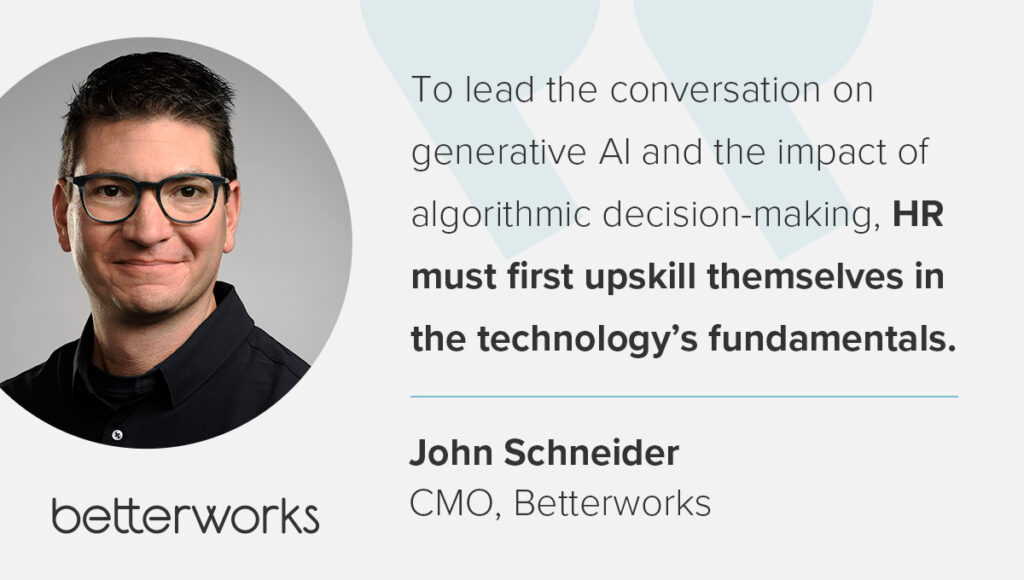
To meet this challenge, prioritize upskilling yourself and your team in AI fundamentals. “To lead the conversation on generative AI and the impact of algorithmic decision-making, HR must first upskill themselves in the technology’s fundamentals,” says Betterworks CMO John Schneider. “By leaning into the tools themselves, HR can separate fact from fiction amidst media noise, becoming the trusted voice that ensures AI enhances, rather than undermines, human potential in the workplace.”
By fostering transparency around AI adoption, engaging employees in open dialogue, and using AI to complement rather than replace human roles, you can drive innovation while maintaining trust. Use regular check-ins to gather feedback on AI implementations and to maintain alignment with organizational goals.
Transforming HR into a strategic business force
The role of human resource management has evolved dramatically. In 2025, HR leaders are expected to step up as strategic business partners. This shift is driven by the demand for measurable impact on business outcomes, whether through talent strategies, employee engagement, or workforce agility. The ability to shape the long-term success of an organization now rests on your ability to align human resource management initiatives with broader goals.
“HR is no longer about pushing paper or managing policies — it’s about stepping into the arena of strategic impact,” John says. “CEOs demand impact, not process, and HR has the unique opportunity to shape the workforce for what’s next, not just what’s now.”
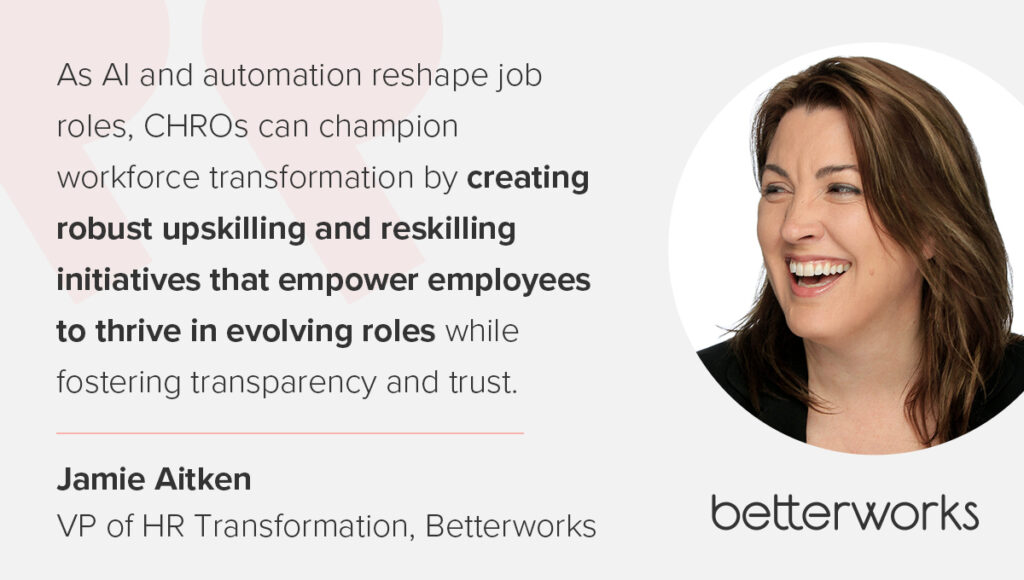
To transform HR into a strategic force, leaders must harness the power of people analytics to inform decision-making, predict trends, and identify areas of opportunity. “As AI and automation reshape job roles, CHROs can champion workforce transformation by creating robust upskilling and reskilling initiatives that empower employees to thrive in evolving roles while fostering transparency and trust,” says Jamie Aitken, VP of HR transformation at Betterworks.
By aligning HR management strategies with business needs, you can foster resilience and adaptability, helping employees feel valued and equipped for the future.
Prioritizing the evolving employee experience
This year, prioritizing the employee experience is critical for employee engagement and retention. As flexible work arrangements and remote work continue to shape workplace norms, you’ll experience increasing pressure to make sure that employees feel supported, connected, and motivated. A strategic focus on the moments that matter — such as onboarding processes, professional development, and work-life balance — can help change organizational culture to attract and retain top talent.
“By fostering innovation, resilience, and agility, HR’s strategic approach ensures a sustainable competitive advantage and positions the organization for long-term success,” Jamie says. “To be successful, many HR teams are leveraging design thinking principles to uncover ‘areas of opportunity’ in their processes and explore how they can reimagine the moments that matter for employees.”
By implementing regular check-ins, gathering feedback, and using performance management tools to align goals with employee aspirations, you can create a work environment that prioritizes both mental health and productivity. Flexible work policies, supported by technology that facilitates connection and collaboration, help remote and hybrid teams remain engaged. These efforts help employees feel valued and supported while driving organizational success.
Closing the skills gap to help workforces adapt
Upskilling and reskilling efforts are essential for keeping employees engaged, enhancing their contributions, and driving long-term success in 2025. “The rapid pace of digital transformation and AI adoption has revealed significant skills gaps,” says Betterworks COO Andrea Lagan. “HR leaders must prioritize upskilling and reskilling to future-proof their workforce.”
Yet, according to our 2024 Skills Fitness report, many business leaders struggle to pinpoint the most critical skills gaps in their workforces. Nearly 7 in 10 use performance evaluations for measuring skills and competencies, but a majority only do those assessments 1-2x per year, leading to a lack of useful data.
Embrace AI-powered tools, like Betterworks, to identify skills gaps, personalize training paths, and track progress in real time. Gamification, accessible training options, and ongoing feedback make learning engaging and dynamic while providing employees with clear development pathways. By integrating real-time tracking, you can make sure that upskilling efforts remain aligned with business needs.
Avoiding middle-manager burnout
Middle managers often find themselves overburdened as organizations streamline operations to improve efficiency. According to a Capterra survey of middle managers, 71% report sometimes or always feeling burned out, and 30% are actively looking for a new job. Without proper support, you risk losing your vital middle managers, which can trickle down to their direct reports and impact overall employee retention and engagement.
“Many organizations are seeking efficiencies by cutting back on middle management in an attempt to streamline decision-making and operations,” says Cheryl Johnson, chief product and technology officer at Betterworks. “While this can be an effective strategy, it also comes with challenges that, if not addressed, can lead to middle-management burnout and disaffection, which can spread to the teams they manage.”
To mitigate this, invest in continuous performance management tools. These provide managers with real-time insights and accommodate performance conversations in the flow of work.
Effectively identifying and deploying internal talent
Matching the right talent to the right roles remains a critical HR management issue, especially in large organizations. Traditional methods often lack the agility needed to address dynamic business needs, slowing progress and affecting morale.
“Matching talent to roles or projects is increasingly complex, especially in large organizations. Traditional talent management lacks the agility to meet dynamic business needs,” Andrea says. “AI transforms this process by rapidly evaluating performance, potential, and aspirations, enabling precise, real-time talent alignment. Tools like internal talent marketplaces and predictive succession planning further enhance agility and ensure readiness for future demands.”
Invest in AI tools to streamline talent alignment so employees feel valued and appropriately placed. By fostering transparency and providing growth opportunities, you can enhance employee retention and build a stronger, more adaptable workforce.
Acquiring the right talent in a competitive market
Competition for top talent has intensified in 2025, raising concerns about growth for 93% of executives, a study by Destination Workplace found.
HR leaders are obliged to navigate a competitive landscape shaped by a remote-first job market, rapid technological advancements, and shifting employee priorities. The skills gap continues to widen, leaving HR departments under pressure to not only attract but also develop the talent required to meet emerging demands. At the same time, candidates have greater expectations, and are seeking flexible work arrangements, purpose-driven roles, and clear opportunities for career growth.
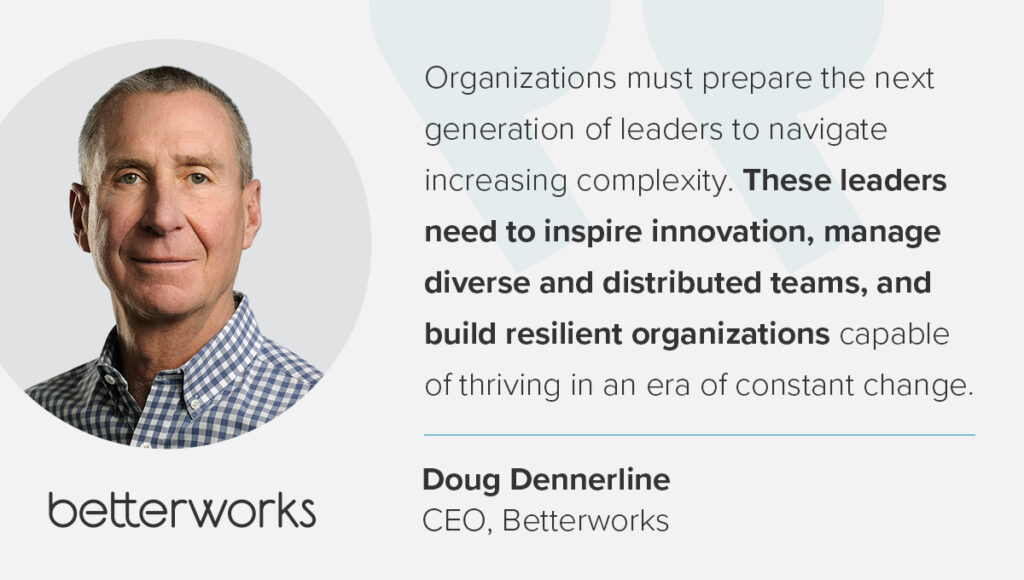
Developing the right people to take on leadership roles poses another challenge. “Organizations must prepare the next generation of leaders to navigate increasing complexity, “Doug says. “These leaders need to inspire innovation, manage diverse and distributed teams, and build resilient organizations capable of thriving in an era of constant change. Successfully addressing these challenges requires a strategic, long-term approach to talent management rooted in adaptability, inclusivity, and alignment with future-focused business goals.”
Resolving the RTO-hybrid battle
As hybrid work and remote work remain popular among employees, tensions persist between leadership advocating for return-to-office (RTO) mandates and employees valuing flexibility. These HR management issues highlight the need for balancing organizational goals with employee satisfaction. HR leaders must balance flexibility with productivity, maintain company culture, and navigate growing resentment among teams with differing work arrangements
“Leadership sees in-person work as vital for innovation, mentorship, and collaboration, while employees often view RTO as disconnected from modern work realities,” Doug says. “Middle managers are caught in the crossfire, tasked with enforcing policies while trying to retain top talent.”
Mediate this divide by implementing hybrid work models that promote equity and collaboration. Effective hybrid work models require careful attention to fairness and accessibility. Ensuring equity between in-office and remote employees can help mitigate proximity bias and create a more inclusive work environment. Addressing these challenges with thoughtful policies and collaborative technology ensures that hybrid teams remain engaged and productive while feeling valued.
Translating employee data for decision-making
Despite having access to vast amounts of employee data, many HR professionals struggle to turn it into actionable insights. This limits their ability to optimize leadership development, strategic HR planning, and workforce management strategies.
“Advanced analytics platforms and AI-driven dashboards can transform data into meaningful insights,” Andrea says, “enabling leaders to proactively monitor engagement, performance, and retention risks and make informed decisions that drive adaptability and success.”
By adopting user-friendly people analytics tools, you can translate complex data into clear workforce trends and actionable strategies. Regularly sharing these insights with leadership teams fosters alignment and helps employees feel their needs are being addressed.
Deciding how to best simplify the HR tech stack
HR management teams are under pressure to streamline their tech stacks without sacrificing essential tools. With economic uncertainty persisting, making thoughtful decisions about technology investments is critical.
Simplifying the HR tech stack requires a strategic balance between cost-saving measures and retaining essential tools. Cutting the wrong tools could set your talent strategy back and create more HR issues than it solves. “Teams need to be very thoughtful about what they cut out and why,” Cheryl says. “Technology investments, if executed well, can be strategic differentiators that drive business impact.”
Evaluate tools based on their long-term value, focusing on solutions that simplify processes, support flexible work, and enhance employee engagement. A cautious yet strategic approach ensures that the tech stack aligns with both current and future organizational needs.
Reference
https://www.paycor.com/resource-center/articles/top-hr-challenges-trends/
https://www.pitchnhire.com/blog/trends-in-human-resource-management
https://www.betterworks.com/magazine/8-of-the-biggest-challenges-for-hr/


Companies face a dynamic environment influenced by technology, globalization, demographic shifts, and changing employee expectations. In your article, you explained it very deeply.
ReplyDeleteGreat article on the importance of HRM! It highlights how crucial effective HR practices are for driving organizational success and employee satisfaction.
ReplyDeleteThis article gives a great overview of the top HR challenges in 2025, with useful trends and solutions. The focus on AI, employee experience, and HR strategy is especially relevant.
ReplyDeleteYour analysis of HRM trends and challenges effectively captures the evolving landscape of human resource management. From embracing technology to managing a diverse workforce, these trends highlight the need for adaptability and strategic foresight in HR practices. Great job on addressing such a valuable topic.
ReplyDeleteYou have highlighted the key HR trends and challenges for the future. It's interesting to see how companies are focusing on diversity, remote work, and upskilling to stay competitive. The role of AI in hiring and people analytics is also really exciting.
ReplyDeleteVery crucial area clearly explained with details,
ReplyDeleteGreat article.
Such and analytical content is brought up on HRM trends. Well explained the factors.
ReplyDelete